Your Complete Week in Review: Multi-Platform AI Strategy, Second Brains, and the Future of CRE

I’ve been thinking a lot about what it really means to build with AI, rather than simply dabble. It’s one thing to ask a model to summarise a report or clean up some notes, but it’s another to start designing actual systems: workflows that run across platforms, prompt frameworks that operationalise entire books, and dashboards that connect to real data.
This week was a good example of that distinction. Between testing video editors, refining TikTok hooks, coding n8n workflows, and turning Peter Lynch and Morgan Housel into AI prompts, I’ve been building the scaffolding for something much bigger: an AI-powered content and investment infrastructure that sits on top of commercial real estate.
Here’s the breakdown of how that unfolded.
Building a Multi-Platform AI Content Strategy
The reAI estate Revolution brand is steadily moving from an idea into an actual media machine. The focus this week was on making my content work harder across platforms — TikTok, YouTube Shorts, LinkedIn, and Substack — while also stress-testing whether external editors can raise the level.
I spent time refining my short-form video hooks. You’d think a two-second intro would be simple, but it’s not. It has to stop someone mid-scroll and position me in the right way. After iterating, the line that’s sticking is: “I’m Teddy. I’m a sober DJ, building with AI, and revolutionising real estate.” It says who I am, what I do, and why you might care — all in a breath.

Meanwhile, I trialled video editors on Upwork. Instead of sifting through bland cover letters, I asked for execution. One candidate stood out by sending me a polished four-minute Loom walkthrough of how they’d improve my channel. It was a good reminder: talent selection in this space isn’t about price per hour, it’s about whether someone can plug into a fast-moving system and deliver without endless hand-holding.
On the technical side, I continued refining automation flows in n8n. Claude has been my go-to for structured prompts and research scaffolding, while ChatGPT remains stronger for creative sparring via customGPTs. Stitching them together means the publishing process becomes less about “writing posts” and more about orchestrating a pipeline.
That’s the real story here: this isn’t a hobby project. It’s about building infrastructure that can scale across multiple channels and audiences, while still feeling authentic.
Turning Books into Second Brains
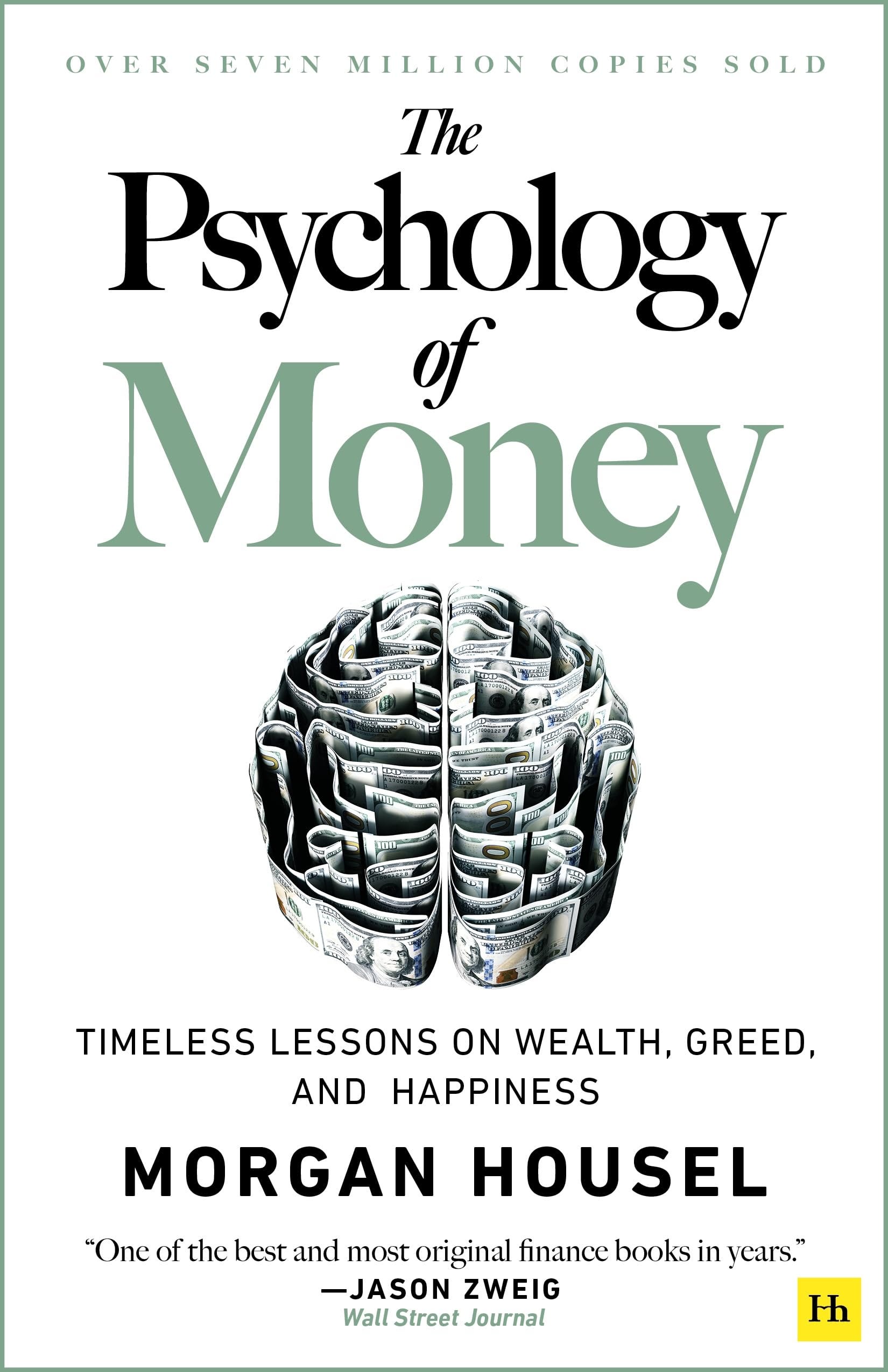
Another major strand of the week was codifying investment wisdom into AI-ready systems. After doing Kahneman last week, I turned to Peter Lynch’s One Up on Wall Street and Morgan Housel’s The Psychology of Money.
Instead of summarising, I built mega-prompts that let me apply these frameworks to deals in real time. For example, Lynch’s categories — stalwart, cyclical, fast grower, slow grower, turnaround, asset play — are now a classification system I run every acquisition through. Each type has its own yardsticks and KPIs, which forces discipline in analysis.
With Housel, the prompts cut through narrative bias. They ask: what’s the actual behaviour of money here? Am I underestimating risk because the story sounds good? Am I falling for first-impression bias? It’s like having a contrarian voice in the room, constantly checking your psychology
This is what I mean by using AI as a “second brain.” It’s not outsourcing the thinking — it’s operationalising the guardrails that great investors have always used, but embedding them directly into workflows. For CRE, it means a Bond Street asset at 4% isn’t just tested on its IRR — it’s tested against cognitive traps that have bankrupted plenty of smart investors before.
Advanced Market Intelligence
The analyst hat was firmly on this week. Three pieces stood out:
Community analysis: I scraped and examined conversations inside the AI for CRE Collective (400+ members). The findings were clear — the pain points are data fragmentation, confusion around automation, and deal sourcing. But the real gem was linguistic: the way members describe problems. Understanding this “native language” is key to building tools people will actually adopt.
Lime’s strike windfall: During last week’s London Underground strikes, I estimated Lime made an additional £1.2m in five days from bike hires. The method was as interesting as the number: combining base-week revenue assumptions with uplift data to quantify the short-term impact of disruption. For CRE investors, this kind of thinking can be applied to everything from footfall spikes to seasonal retail performance.
Counter-argument drills: I’ve been pressure-testing my own theses — industrial resilience, office distress — by having AI generate structured counter-cases. It’s uncomfortable, but necessary. The best analysis isn’t collecting data that proves your point; it’s finding the data that threatens to disprove it, and seeing if your thesis still holds.
All three examples reflect the same instinct: move from raw data to actionable insight.
Technical Problem-Solving in CRE
Not everything was high-level strategy. A fair amount of my time was spent in the weeds:
Debugging n8n workflows that scrape Google Maps for UK commercial property applications.
Adapting data pipelines so Power BI dashboards don’t just report but actually diagnose — linking vacancy to capex, parsing returns properly, and avoiding common mis-calculations (like dividing average losses incorrectly).
Experimenting with RICS survey automation. This is less glamorous than deal sourcing, but the truth is: some of the biggest AI wins in property will come from replacing clipboard-and-spreadsheet work with clean, automated workflows.
The bigger point: strategy only matters if you can bridge it to execution. Dashboards, scrapers, and scripts are the bridge. Without them, everything stays in the dreaming phase.
AI as Creative Sparring Partner
The most important realisation of the week was philosophical: AI is becoming less of a Q&A machine for me, and more of a sparring partner.
When I draft a deal thesis, I now run it through prompts designed to expose blind spots. When I sketch a narrative, I force AI to play devil’s advocate. When I summarise a book, I don’t just get a neat abstract — I get a framework I can challenge myself with.
It’s like sitting across from a colleague who always asks the tough questions. It doesn’t do the work for me, but it sharpens the work I’m already doing. And in a field as story-driven as commercial property, that kind of sparring is priceless.
AI News You Need to Know
Here’s the distilled version of the last seven AI Daily Brief episodes, with a lens on CRE implications:
OpenAI expands enterprise pricing — signalling a push to lock in corporate budgets before Anthropic and Google catch up. For property firms, this means AI will show up in OPEX lines sooner than expected.
DeepMind’s Gemini goes multi-modal — not just text and image, but tables and charts. That’s a potential step-change for analysts who live inside Excel and Power BI.
Meta launches open-source agent framework — modular AI components you can swap in and out. Think: one bot for lease analysis, another for tenant covenant checks.
Apple pushes on-device AI for iPhone 17 — smaller models that run without cloud calls. For CRE, it means surveyors, leasing managers, and asset teams could carry AI in their pocket, offline.
Anthropic releases Claude 3.7 — faster reasoning and better at multi-step maths. Strong fit for cashflow modelling, IRR matrices, and underwriting tasks.
Nvidia unveils new inference chips — higher throughput, lower latency. Infrastructure matters: if your AI dashboards feel snappier in six months, this is why.
EU tightens AI regulation — with explicit mention of financial and property use-cases. Compliance won’t be optional; family offices and funds will need frameworks for responsible AI rollouts.
Meta Takeaway
The thread running through both my week and the wider news is this: AI isn’t arriving as a single monolithic product. It’s fragmenting into a stack of specialised layers — hardware, models, agents, workflows, regulations.
The winners won’t be the people who use one model well. They’ll be the ones who orchestrate the stack.
In content, that’s Claude + ChatGPT + human editors working together.
In investment analysis, that’s Lynch + Housel + mega-prompts + counter-argument drills.
In operations, that’s scrapers, dashboards, and survey automation connected by glue code.
In strategy, that’s recognising regulation and infrastructure are shaping adoption just as much as model updates.
That’s what I’m building in public each week. And the more I test, the clearer it gets: the gap between dabbling and operationalising is widening.
The best time to build with AI in real estate was last year. The second-best is now.